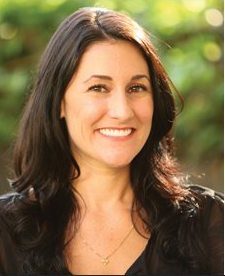
Why I Started Patch Counseling: A Letter From Our Founder
As Patch Counseling approaches ten years, I've been thinking more about how much the practice has changed since I first started seeing clients on my own in 2017.
I didn't start with a plan to build a group practice. I was trying to figure out how to do work I cared deeply about in a way that was creative, sustainable, and allowed me to be a good therapist without completely burning myself out.
Some of what Patch has become was very intentional. Other parts developed because I kept paying attention: to the people I was working with, to what actually seemed to help them, and to what I was learning in my own life along the way.
Looking back, I can see how connected those things have been.

Patch Counseling Didn't Start With a Business Plan for What It Would Become
I've always been someone who does better when I have a few things going on at once. At one point, that meant going to school, working in a restaurant, and teaching art on the side. Later, I was working at an outpatient clinic, seeing private practice clients, and running groups at a treatment center.
Some of that was out of necessity, but I also genuinely liked the movement. My brain worked better that way.
One of the most significant periods of burnout I experienced happened while I was collecting my hours for licensure. I had my first real desk job, and it became pretty clear that the structure wasn't working for me. Around the same time, I was finally diagnosed with an autoimmune disorder that had been affecting me since my mid-twenties.
Those experiences forced me to think differently about what I could realistically ask of myself. I knew I was a good therapist and I knew I worked hard, but I was beginning to understand that being capable of doing something and being able to sustain the way you're doing it are two different things.
Private practice gave me an opportunity to build something differently.
I had no idea how to run a business, so I learned. I watched what other therapists were doing, asked questions, reached out to practice owners I admired, and found a community of therapists who helped me understand the business side of private practice.
In 2018, I moved my practice to Rancho Bernardo. I was married by then and thinking about starting a family. Being close to my own family mattered to me. I wanted a career that was meaningful, but I also wanted to build it in a way that left room for my health, my family, and the rest of my life.
Then I became a mother, the pandemic happened, and both my life and my work changed again. The need for mental health support grew, particularly among the teens and families I was working with, and eventually I couldn't meet that need on my own.
Growing from an individual practice into Patch Counseling was exciting, but it was also scary. I was protective of what I had built. Bringing another therapist into the practice meant trusting someone else with something that had become very personal to me.
It also forced me to get much clearer about what I wanted Patch Counseling to be.
What I Started Noticing
Over the years, I started noticing a pattern in the people I was working with.
Many of them were incredibly capable.
They weren't struggling because they didn't care, weren't motivated, or weren't trying hard enough. More often, something had changed, and the strategies that had gotten them this far weren't working as well anymore.
For a pre-teen, that might happen when middle school suddenly requires more independence, organization, and social awareness. A teenager who has always done well academically may become so afraid of making a mistake that they procrastinate or avoid things altogether. A young adult can leave the structure of high school and suddenly be expected to manage college, work, relationships, and major decisions about who they want to become.
Adults aren't really that different.
A promotion can change what's expected of you. Parenthood can change your time, relationships, priorities, and sense of who you are. Marriage, divorce, caregiving, loss, career changes, and other transitions can shift things that once felt fairly stable. Sometimes even getting something you worked very hard for can leave you wondering why it doesn't feel the way you thought it would.
Over time, I became less interested in starting with "What's wrong?" and more interested in asking, "What changed?"
That doesn't mean symptoms or diagnoses aren't important. They are. But they don't tell me everything I need to know about a person.
Sometimes the demands have changed. Sometimes your role has changed. Sometimes you've changed. And sometimes the way you've always pushed through isn't enough for what life is asking of you now.

pc: Edward Howell
Patch Grew Alongside Me, Too
Part of the reason this way of thinking resonates so strongly with me is that my life continued changing right alongside the practice.
I've become a business owner, wife, mother, and daughter with changing family responsibilities. I've learned more about my own ADHD and had to reconsider some of the ways I thought about productivity, success, and balance.
Being a therapist doesn't make me immune to any of this.
I understand development, behavior, relationships, and mental health professionally. I also still have to figure out how to apply some of those same ideas while raising children, running a business, maintaining relationships, taking care of my health, and deciding what deserves my time and energy.
I certainly haven't figured out how to do all of those things perfectly. I don't think that's the goal anymore.
What I have learned is that needing to adjust doesn't necessarily mean you're failing. Sometimes what you're carrying has changed. You may need different skills, more support, clearer boundaries, or a different way of doing things.
And sometimes you need someone to help you figure out which one it is.
How That Shaped Patch Counseling
Over time, three words became the clearest way to describe the kind of practice I wanted to build: compassion, collaboration, and creativity.
Compassion isn't about assuming someone is fragile or lowering expectations because something is hard. To me, it's being able to hold two things at once: this is genuinely difficult, and I still believe you're capable.
Collaboration means I don't believe my role as a therapist is to sit across from someone and tell them how to live their life. I bring training, experience, perspective, and tools, but you bring something I don't have: the experience of actually being you. Your goals, values, culture, relationships, strengths, and feedback need to be part of the work.
Creativity has been part of who I am for much longer than I've been a therapist. My background began in art and education before I became a Clinical Art Therapist and Marriage and Family Therapist. Sometimes creativity literally means making art because words aren't enough. Other times, it means looking at a problem differently, adapting an approach when it doesn't fit, or building something new when what already exists isn't working.
In many ways, that's also how I built Patch Counseling.
There isn't one planner that works for every person with ADHD. There isn't one coping skill that works for every anxious teenager. There isn't one definition of balance that makes sense for every adult.
That's why our therapists integrate Clinical Art Therapy with approaches including CBT, DBT, EMDR, mindfulness, and practical skill-building. The goal isn't to fit a person into an intervention. It's to understand the person well enough to figure out what might actually help.
Where We Are Today
Patch Counseling looks very different today than it did when I started seeing clients on my own in 2017, but the reason I continue to do this work is actually pretty simple.
Life can be difficult, even when you're capable.
We work with pre-teens, teens, emerging adults, adults, and families who may be at very different stages of life, but much of the work comes back to the same thing: understanding what's happening, recognizing the strengths you already bring with you, and figuring out what you need for what comes next.
I certainly don't have everything figured out either. I'm still learning how to be a therapist, business owner, mother, wife, and person without expecting myself to do every one of those things perfectly.
Maybe that's part of why I continue to believe so strongly in this work.
I don't think growth has a final destination. We're always changing, learning, and adapting. But maybe, over time, we become more comfortable with that process. There can be more ease, less pressure to have everything figured out, and less focus on constantly reaching for the next rung of the ladder.
I'm still learning that for myself. And it's become an important part of what I want Patch Counseling to offer the people who come through our doors.