Let’s clear up one vital misunderstanding up front: art therapy is not an art class.
When parents and their teens hear “art therapy,” it’s easy to picture a teen sitting at a table, often painting, while an adult offers explicit instruction or encouragement.
But that’s not what it is at all. The purpose is very different.
In an art class, the focus is typically on learning artistic skills, experimenting with materials, or creating a finished project. In Clinical Art Therapy, the creative process is intentionally used as part of psychotherapy and is often more important than the finished artwork itself. The focus isn’t on whether a teen can draw, paint, or make something that looks “good.” Instead, art becomes another way to communicate, explore experiences, build coping skills, practice flexibility, and better understand what’s happening internally.
Similarly, an art therapist isn't simply handing a teen a paintbrush and saying, “Go express yourself” with no support. The creative process is intentionally prompted and guided based on the teen’s unique needs and treatment goals.
Sometimes making art helps a teen talk about something that is difficult to put into words. Sometimes the process brings attention to patterns like perfectionism, frustration, avoidance, or difficulty making decisions. And sometimes creating something gives a teen enough distance from a difficult experience to look at it in a new way.
That’s what makes Clinical Art Therapy more than simply making art: the creative process becomes part of the therapeutic work.
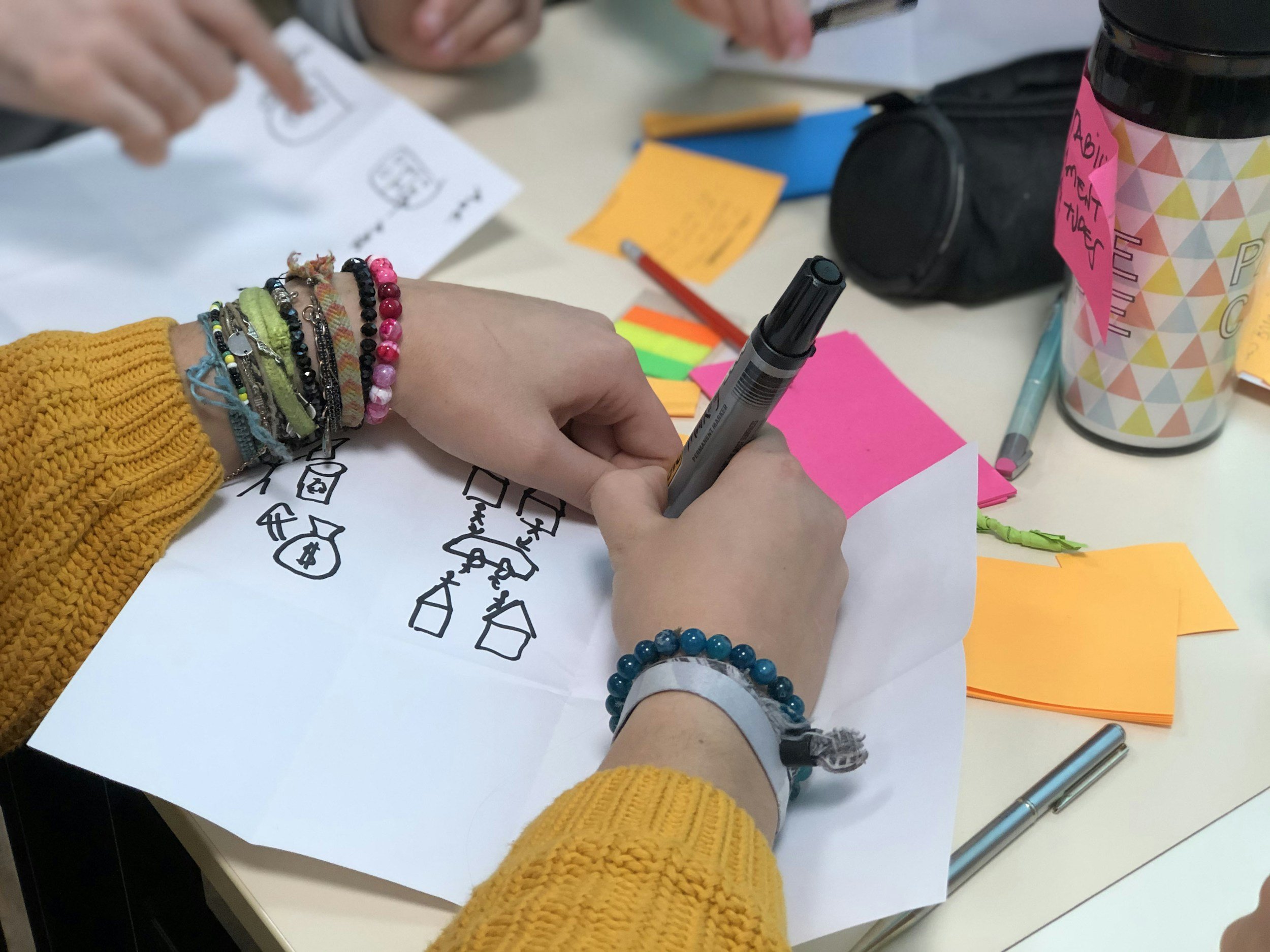
And no, your teen does not need to be “good at art.” Stick figures are happily encouraged.
Why Can Art Therapy Be Helpful for Pre-Teens and Teens?
Middle school and high school bring a lot of change. Academic expectations increase. Friendships become more complicated. Teens are figuring out who they are, becoming more independent, navigating changing family relationships, and taking on more responsibility for managing their time, emotions, and commitments.
That’s a lot to juggle.
A teenager can be articulate, thoughtful, and self-aware and still have difficulty explaining what they’re experiencing. They might know they’re overwhelmed without knowing exactly how to describe it. They might understand that they’re anxious but struggle to explain what that anxiety feels like in their body.
That’s where art comes in. As the saying goes, “A picture is worth a thousand words.”
Instead of immediately asking, “Tell me how you feel,” an art therapist might invite a teen to visually represent what stress feels like, map out everything competing for their attention, or use an image or metaphor to explore an experience or relationship.
Sometimes art introduces a new language for communicating and makes it easier to start talking.
What Can Art Therapy Actually Look Like in a Session?
There isn’t one standard art therapy activity that every teen does. Art therapists individualize the creative process based on the teen’s developmental level, interests, needs, and treatment goals.
For example, a therapist might invite a teen to:
Visually map what feels overwhelming at school or home.
Externalize strong emotions into an image to represent anxiety, perfectionism, anger, etc.
Use images or metaphor to explore identity or relationships.
Represent an experience that is difficult to describe with words.
Experiment with different ways of approaching a problem.
Notice what happens internally when something doesn’t turn out as expected.
A teen might use a variety of materials, depending on their comfort level: drawing, painting, collage, sculpture, or mixed media. Art therapists sometimes sit quietly while teens make art; other times, they may combine art-making with conversation or other therapeutic approaches.
And the finished product doesn’t need to be impressive. It doesn’t even need to be finished.
The point isn’t to produce something that belongs on the refrigerator or a museum wall.
The point is to use the creative process in a way that supports the work of therapy.
Art Therapy Isn’t Only About Expressing Feelings
Another common misconception is that art therapy is simply a way for teens to “get their feelings out.”
To be clear — it can be that. We like to think of that as art in therapy: using art materials to externalize an internal experience. But the creative process can also provide opportunities to practice skills, which is part of what makes it art therapy.
Creative work can involve problem-solving, flexibility, decision-making, planning, and frustration tolerance.
Imagine a teen who becomes frustrated when something doesn’t look the way they pictured it.
That moment can become part of the therapy.
What happens when something goes wrong? Do they immediately want to start over? Do they become critical of themselves? Can they try something different? Can they tolerate an imperfect result?
Those reactions can provide useful information, but they can also create an opportunity to practice responding differently. The goal becomes experimenting with another approach, sitting with the frustration for a little longer, or learning that something doesn’t have to be perfect to be finished.
Sometimes what happens while making the art is just as important as what ends up on the page.
How Does Art Therapy Fit With Other Forms of Therapy?
Clinical Art Therapy doesn’t have to be an either/or choice. Some of our teens create art in every session; others never touch a pencil, marker, or paintbrush.
Depending on the teen and their goals, a therapist may integrate art therapy with approaches such as CBT, DBT, EMDR, mindfulness, executive functioning support, or practical skill-building.
The goal isn’t to use art in every session. Art therapists typically invite a teen to make art. If the teen says “no,” we respect that choice.
Sometimes simply talking is exactly what a teen needs. Sometimes a practical skill is more helpful. Sometimes art provides a different way to approach something that has been difficult to discuss directly.
Good therapy isn’t about forcing a teen into one particular method. It’s about having different tools available and figuring out what fits the teen best.
Who Might Benefit From Art Therapy?
Teens don’t need a particular diagnosis or even consider themselves artistic to benefit from a creative approach.
Parents might consider art therapy when they notice that their pre-teen or teen:
Has difficulty explaining what they’re feeling.
Shuts down during direct conversations about emotions.
Is struggling with anxiety, perfectionism, or frustration tolerance.
Has difficulty with flexibility or managing strong reactions.
Is experiencing executive functioning challenges.
Is navigating significant changes involving school, friendships, family, or identity.
Some will jump into creative work right away. Others may need time to build trust before trying something unfamiliar. That’s okay.
What Should Parents Look for When Considering Art Therapy?
If you’re considering art therapy for your child, it’s worth asking about the therapist’s mental health licensure, art therapy education or credentials, and experience working with pre-teens and teens. Keep in mind that Art Therapists are master’s-level clinicians with specialized education and training in art therapy.
Some therapists use art in therapy, but that does not necessarily mean they are an Art Therapist.
One distinction is that Art Therapists are intentional about how they use the creative process in therapy. This can include considering which materials or interventions may be most appropriate, how an activity connects to the teen’s treatment goals, and how to guide reflection about the artmaking process.
You can ask questions such as: How does art therapy fit into the therapist’s overall approach? Is it being used as part of psychotherapy? How does the therapist determine which approaches may be appropriate?
Finding the right art therapist can give a pre-teen/teen space to communicate, explore experiences, practice skills, and make connections between what they think, feel, and do. It’s to use the creative process as another way to understand what’s happening, work through challenges, and build confidence in a teen’s ability to handle them.
Want to learn more about how art therapy works?
Schedule a Consultation
Patch Counseling provides Clinical Art Therapy for pre-teens/teens, emerging adults, and adults at our office in Rancho Bernardo, San Diego. Online therapy is also available throughout California when appropriate.

ABOUT THE AUTHOR
Brittany Benjamin Amante, LMFT #157109, ATR, is a Pre-Teen + Teen Therapist and Registered Art Therapist at Patch Counseling in Rancho Bernardo, San Diego. She works with young people navigating anxiety, ADHD and executive functioning challenges, academic and social pressure, changes in mood, and the developmental demands of adolescence. Brittany integrates Clinical Art Therapy with CBT, DBT, and EMDR to help teens better understand themselves and build practical skills that support them as they grow.